


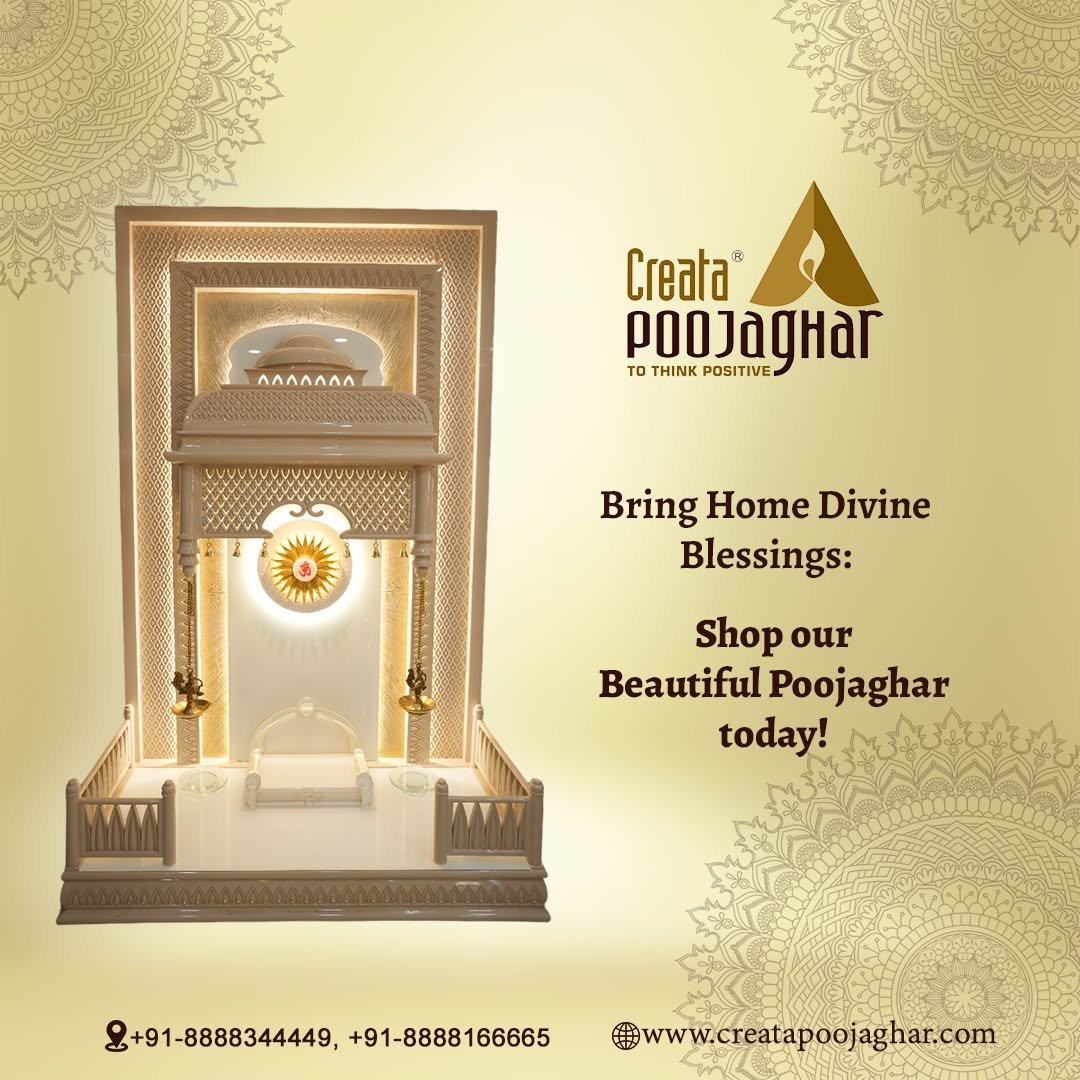
The first thing most people ask us is not about wood or price. It is about space: “Can I hang it, or does it need to stand on the floor?” The answer decides the size, the storage and even how the family uses the pooja corner. If you are still deciding on a wooden temple for home in Nagpur, start with the wall and the floor you actually have.
Wall Mounted Mandir
A wall mounted mandir frees the floor completely. It suits flats where every square foot counts, and it keeps the idols at a respectful height without a separate platform.
Three things matter before you drill:
- Wall type: brick and concrete take the load well, while a hollow partition wall needs extra support
- Weight: a solid wood unit with idols and a brass lamp is heavier than it looks
- Height: the idols should sit at or slightly above eye level when you stand, not at your waist
One mistake we see often is choosing a wall unit with no base shelf. Without a ledge, the diya, the thali and the bell have nowhere to go, and a small side table ends up beside it anyway. A good wall mounted design has a deep bottom shelf for exactly these.
Floor Standing Mandir
A floor standing mandir is the traditional choice, and it is still the better one for most homes with a spare corner. It carries more weight, holds bigger idols and gives you room for drawers, shelves and doors in the base.
It also needs no drilling, which matters if you rent. You can move it when you change house, and the whole unit comes with you. The trade-off is the footprint. Measure the corner, then add some room in front so that two people can stand there for aarti without touching the wall behind them.
For a family that does a daily pooja with the children, a floor unit with a lower shelf also lets kids place flowers and prasad themselves, which is how many of them first learn the ritual.
Hand Carved Wooden Mandir
Whichever shape you pick, the carving decides how the mandir will age. A hand carved wooden mandir has depth in the pillars, arches and floral panels that machine cutting does not match. The edges are slightly different from piece to piece, which is exactly what makes it feel like a craft and not a product.
When you inspect one, run your hand along the carved surface. It should feel smooth, without splinters or sharp ridges. Look at the joints at the corners as well. They should be tight and even, with no gaps filled by putty.
If you want a simple look, ask for lighter carving on a plain frame. Carving is not an all-or-nothing choice. A single carved arch on a clean unit often looks richer than a fully carved one in a small room.
Mandir Store in Nagpur: Check the Size Before You Decide
A tape measure answers the wall-or-floor question better than any article. At our mandir store in Nagpur you can stand a wall unit against a wall and a floor unit in a corner, and see which one leaves your room feeling right.
A quick way to decide:
- Rent or own? Renting usually points to a floor standing mandir.
- Less than a metre of free floor space? Choose a wall mounted mandir.
- Large idols or a lot of samagri? Choose a floor unit with storage.
- Small children at home? Pick a unit with no sharp corners at their height.
If you cannot visit, send us the size of your wall or corner and we will help you choose. Talk to Creata Poojaghar and share your budget, and we will suggest designs that fit the space. You can also read how we work on our about page.
